 Image 1 of 6
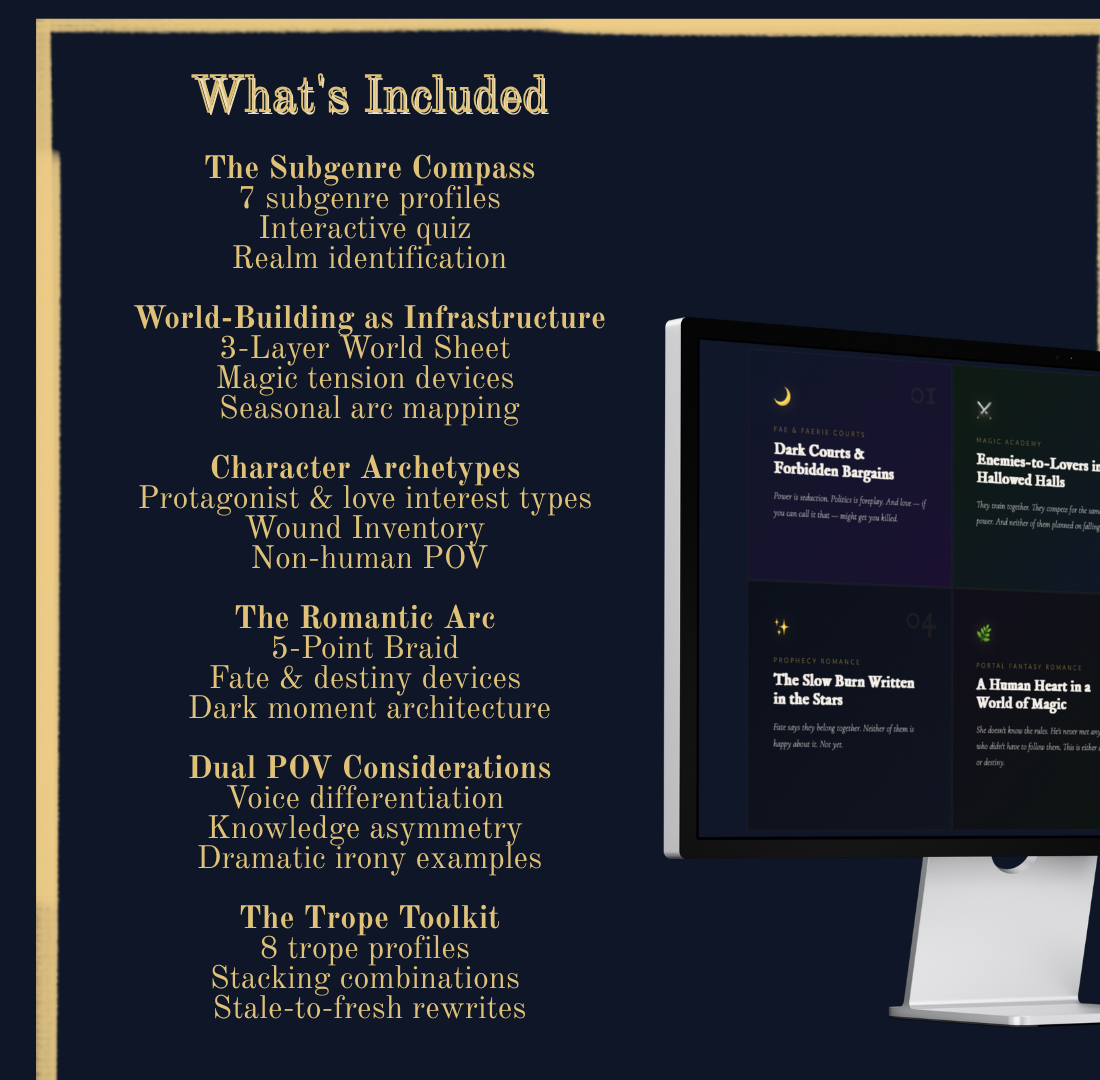 Image 2 of 6
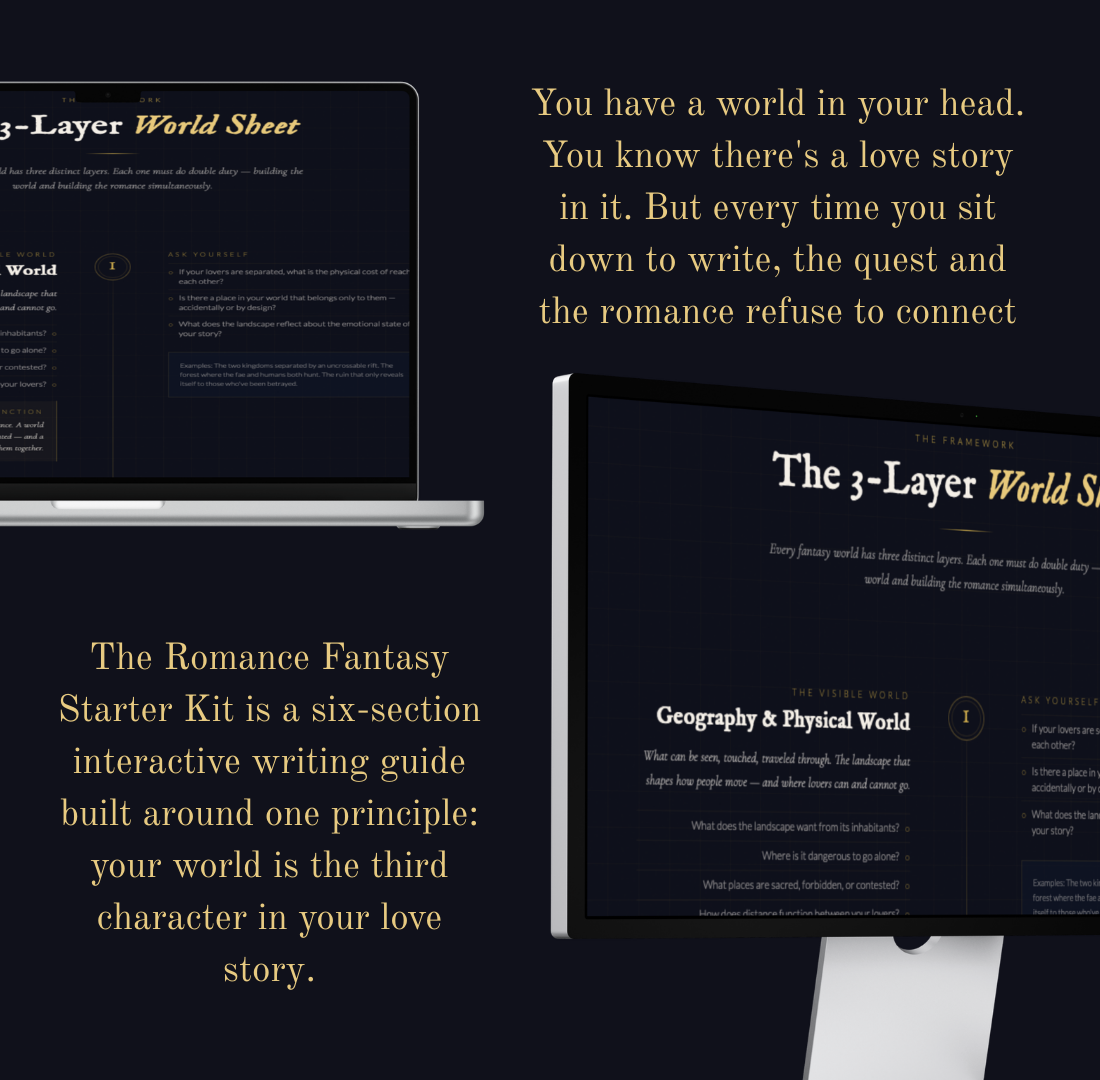 Image 3 of 6
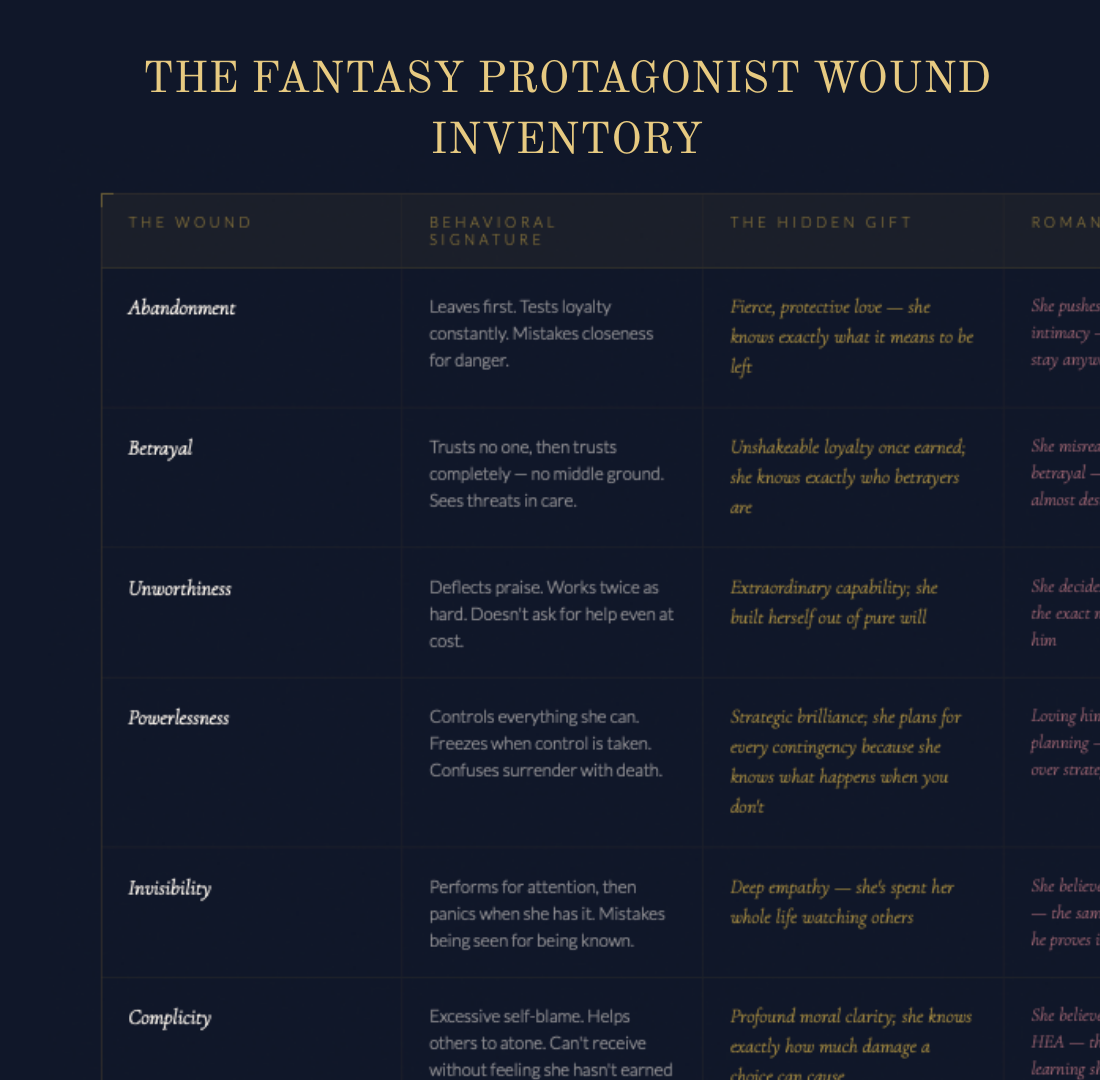 Image 4 of 6
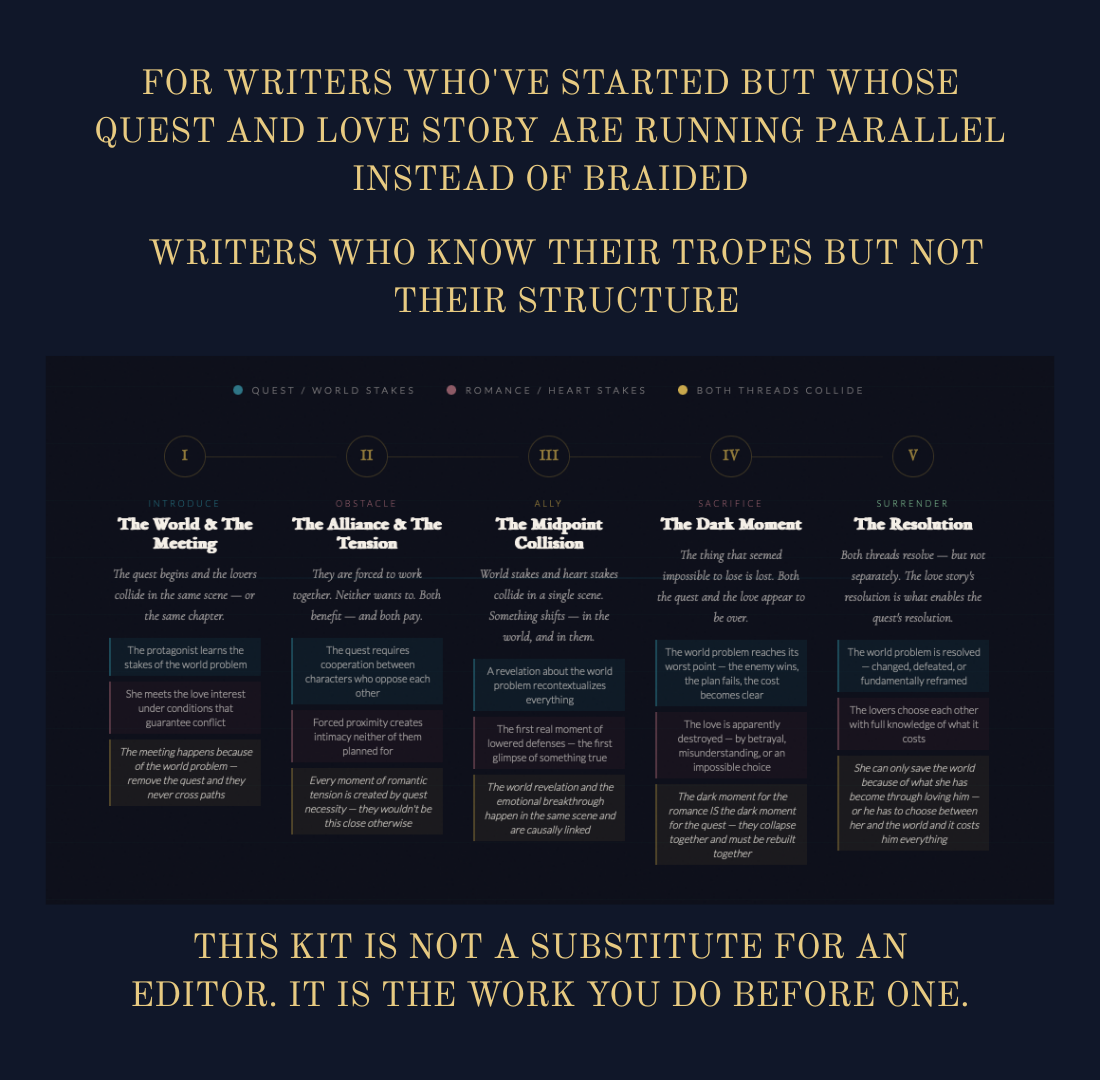 Image 5 of 6
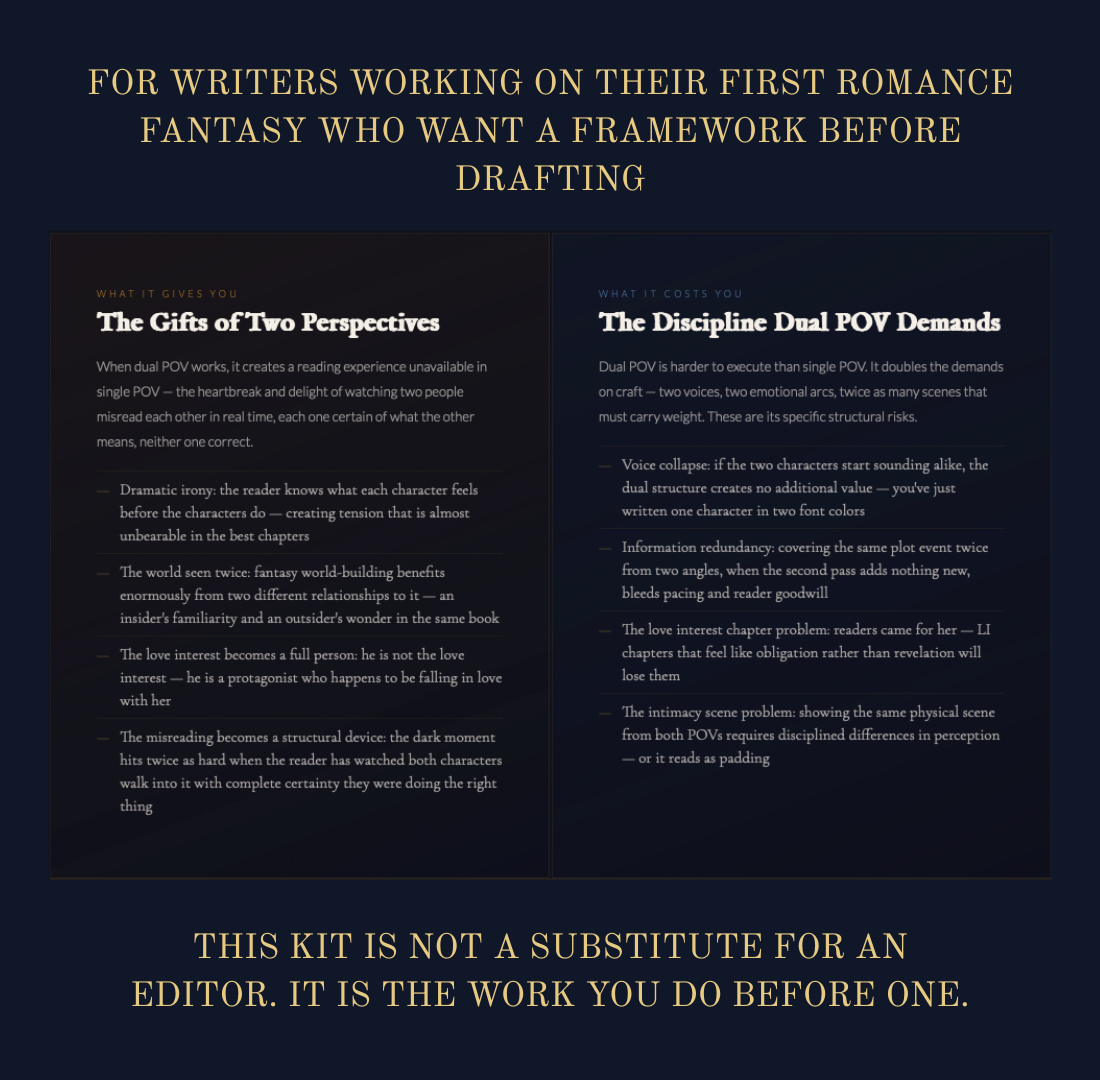 Image 6 of 6
The Premise
I built this kit because the most common problem I see in romance fantasy manuscripts isn't the writing. It's the architecture. The quest and the love story are running side by side instead of through each other. The world is gorgeous, but it isn't doing any romantic work. The tropes are right, but the structure underneath them isn't holding. This kit fixes the architecture before you write a word — or helps you find what's missing in the draft you've already started.
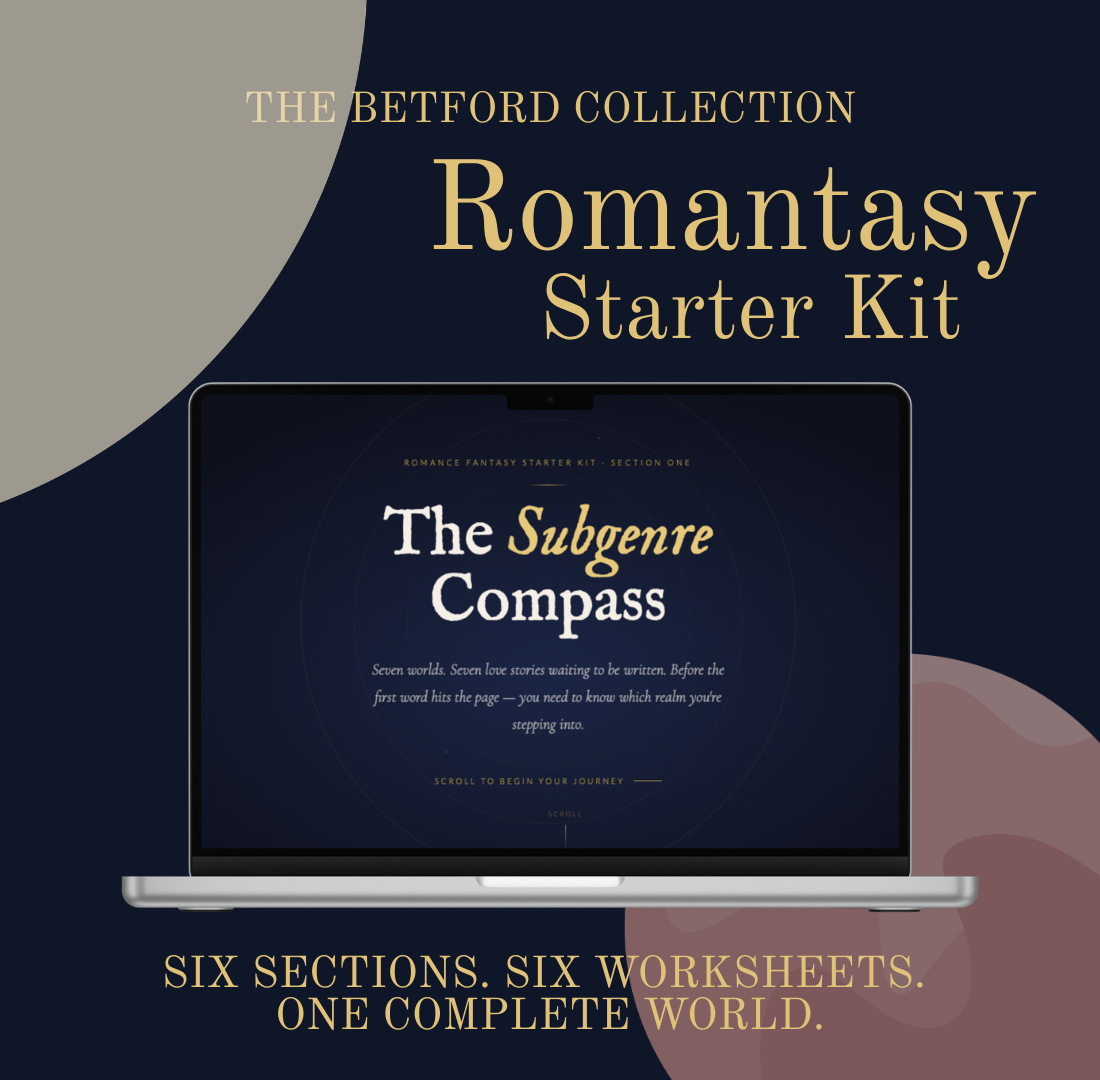
Six sections. Six interactive worksheets. One complete framework for writing romance fantasy from the world up.
SECTION: What's Inside
I — The Subgenre Compass Seven romance fantasy subgenres, fully mapped — tropes, reader expectations, craft notes, and an interactive quiz that identifies your natural realm. Fae courts, magic academy, mythology, prophecy, portal fantasy, heist & quest, monster romance. Worksheet: Subgenre Identity Quiz
II — World-Building as Romance Infrastructure The 3-Layer World Sheet: geography (proximity), social structure (forbidden love), magic system (vulnerability). This is the session where you stop building a backdrop and start building a story engine. Worksheet: 3-Layer World Sheet
III — Character Archetypes: Three protagonist archetypes. Four love interest archetypes. A Fantasy Wound Inventory that maps six wound types to their romantic function. Plus techniques for writing non-human POV that feels genuinely strange, not human in costume. Worksheet: Character Portrait Sheet
IV — The Romantic Arc The 5-Point Fantasy Romance Braid — the framework I use for every romance fantasy manuscript I work on. Quest and love story, mapped together at every structural beat so neither plot can breathe without the other. Worksheet: Romantic Arc Planner
V — Dual POV Considerations: The craft challenges specific to two powerful voices. Full same-scene demonstrations in both POVs with annotation. Knowledge asymmetry as a romantic device. Three dramatic irony examples written out in full.Worksheet: Dual POV Voice Sheet
VI — The Trope Toolkit: Eight commercially powerful tropes examined all the way down — emotional promise, required beat sequence, fantasy amplification, and the trap that collapses each one. Six stacking combinations. Stale-to-fresh rewrites that show exactly how specificity transforms a familiar trope. Worksheet: Trope Planner + Specificity Test
SECTION: How It Works
This isn't a PDF you skim once and forget about. It's an interactive HTML kit that lives in your browser — no account, no subscription, no internet required after download.
→ Purchase and receive a download PDF in your inbox → Unzip one folder, open index.html in any browser → Navigate all six sections from a single hub → Type directly into the built-in worksheets → Copy your answers into your working document before closing
Works in Chrome, Safari, Firefox, and Edge. Your answers stay entirely private — nothing leaves your computer.
SECTION: Who This Is For
You're writing your first romance fantasy, and you want to build the world and the love story together, not retrofit one onto the other.
You're mid-draft, and something isn't working — the momentum is gone, the plot feels mechanical, the romance feels separate from everything else.
You know your tropes. You've done the reading. What you need now is the structural framework underneath them.
You're a plotter who wants a system, or a pantser who wants worksheets that work alongside the draft rather than before it.
You're writing a series, and you need a world that functions as a brand — something readers can return to, recognize, and love.
This kit is not a substitute for an editor. It's the work you do before one — and the work that makes the editorial process faster, cleaner, and more intentional.
SECTION: The Details
6 interactive HTML sections with built-in worksheets
Subgenre Identity Quiz, 3-Layer World Sheet, Character Portrait Sheet, Romantic Arc Planner, Dual POV Voice Sheet, Trope Planner
index.html navigation hub connecting all sections
Instant digital download — ZIP file delivered via PDF link